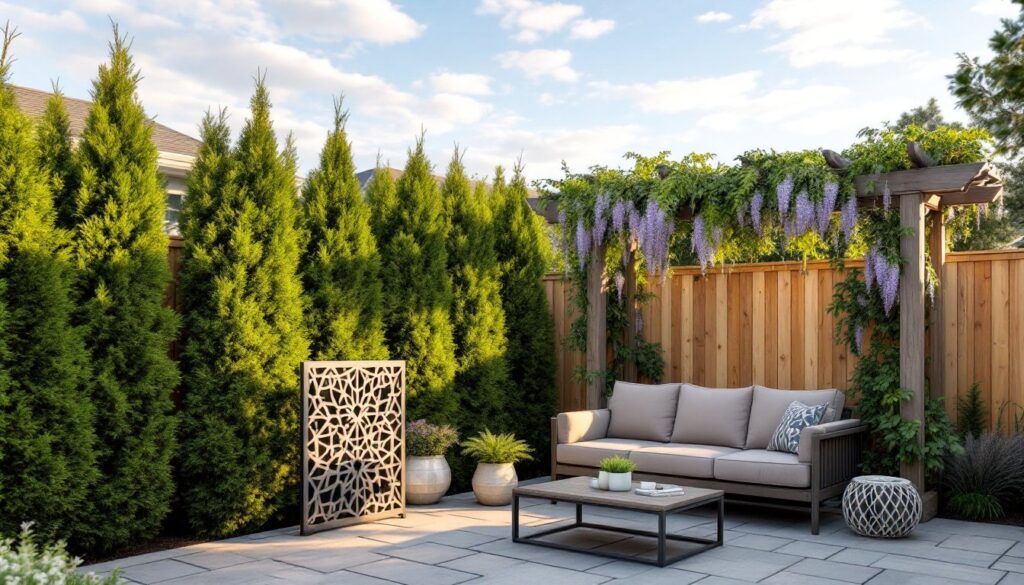
When neighbors peer into your outdoor space or passing traffic disrupts your evening on the deck, the backyard loses its appeal. Privacy transforms an exposed yard into a genuine retreat, a place to grill without an audience, let kids play freely, or relax without feeling watched. Fortunately, creating seclusion doesn’t require a fortress wall or a six-figure landscape redesign. With the right combination of fencing, plantings, structures, and screens, homeowners can carve out a private oasis that fits their budget, timeline, and aesthetic. Here are ten proven solutions that work.
Table of Contents
ToggleKey Takeaways
- Privacy in your backyard reduces stress, increases property value, and buffers noise—making it a worthwhile investment for outdoor living and family enjoyment.
- Solid privacy fencing (6–8 feet) is the fastest solution, with options ranging from affordable pressure-treated pine ($15–$25/linear foot) to durable composite materials ($40–$60/linear foot).
- Evergreen trees and hedges like Arborvitae and Eastern Red Cedar create living privacy barriers year-round and should be spaced 1.5 to 4 feet apart based on mature spread.
- Layering multiple privacy solutions—such as combining a fence, strategic plantings, and decorative panels—blocks multiple sightlines and buffers noise more effectively than a single method.
- Outdoor structures like louvered walls and pergolas offer flexible, architectural privacy options that work in tight spaces and zoning-restricted areas while adding design appeal.
- Always check local zoning laws and call 811 before installation to verify setback rules, fence height limits, and underground utilities to avoid costly mistakes or disputes.
Why Backyard Privacy Matters for Your Home
Privacy isn’t just about blocking sightlines, it’s about controlling your environment. A secluded backyard reduces noise from neighboring properties, creates a safe zone for children and pets, and increases perceived square footage. Psychologically, privacy lowers stress and encourages outdoor use: people spend more time in spaces where they feel shielded from observation.
From a property value standpoint, privacy features rank high with buyers. Fences, mature hedges, and well-placed structures signal a finished, intentional landscape. In urban and suburban settings where lot lines are tight, privacy solutions can make or break outdoor livability. They also buffer wind, filter dust, and reduce headlight glare from adjacent streets.
Before choosing a solution, assess your specific needs. Is the issue a second-story window overlooking your patio? A busy sidewalk along your property line? Or a neighbor’s deck that shares a sightline with your hot tub? The answer shapes your approach, vertical screens work for elevated views, while perimeter fencing handles ground-level exposure.
Install Privacy Fencing for Instant Seclusion
A solid-board fence is the fastest, most definitive privacy solution. Standard heights are 6 feet (common in most residential zones) or 8 feet (check local zoning: some jurisdictions cap fence height without a variance). Materials include:
- Pressure-treated pine: Affordable ($15–$25 per linear foot installed), requires annual staining or sealing to prevent rot and warping.
- Cedar or redwood: Naturally rot-resistant, weathers to silver-gray without finish, costs $25–$40 per linear foot.
- Vinyl: Low-maintenance, won’t splinter or fade, $30–$50 per linear foot, but can crack in extreme cold.
- Composite: Mimics wood grain, highly durable, $40–$60 per linear foot, good for high-traffic areas.
Installation basics: Set 4×4 posts in concrete every 6 to 8 feet, attach 2×4 horizontal rails (top, bottom, and mid-span), and fasten fence pickets with galvanized or stainless screws. Posts should be sunk one-third their total height (a 6-foot fence above grade needs posts sunk 3 feet deep). Always call 811 to locate underground utilities before digging.
Permit requirements: Most municipalities require a permit for fences over 6 feet or those along property lines. Verify setback rules and easements, fences too close to sidewalks or rights-of-way may need adjustment. If you share a property line, discuss plans with neighbors to avoid disputes. In some HOAs, fence style and color must be pre-approved.
Pro tip: Board-on-board fencing (pickets overlap slightly on alternating sides) provides privacy from multiple angles and better withstands wind than solid-panel designs.
Use Strategic Landscaping and Natural Screens
Living privacy barriers soften hardscapes and integrate with existing plantings. They take longer to establish than fences but offer seasonal interest, habitat for wildlife, and improved air quality. Strategic plantings can also complement backyard design ideas that focus on creating inviting outdoor spaces.
Evergreen Trees and Hedges
Evergreens maintain foliage year-round, making them the backbone of natural privacy. Top choices include:
- Arborvitae (Thuja): Fast-growing (1–2 feet per year), narrow columnar habit (3–5 feet wide), tolerates full sun to part shade. Green Giant reaches 20–30 feet tall: Emerald Green stays compact at 10–15 feet. Plant on 3- to 4-foot centers for a solid hedge.
- Eastern Red Cedar (Juniperus virginiana): Dense, drought-tolerant, native to most of the U.S., grows 15–25 feet tall and 8–15 feet wide. Handles poor soil.
- Privet (Ligustrum): Semi-evergreen in mild climates, deciduous in cold zones, grows 8–12 feet tall, tolerates heavy pruning. Plant on 2-foot centers, shear annually in late winter.
- Bamboo (clumping varieties): Grows 10–20 feet in one season, creates a tropical look. Clumping bamboo (Fargesia species) won’t invade: running bamboo (Phyllostachys) requires root barriers (30-mil HDPE liner sunk 24–30 inches deep) or it will spread aggressively into neighboring yards.
Planting tips: Amend soil with compost, mulch with 2–3 inches of shredded bark (keep mulch away from trunks), and water deeply once a week for the first two growing seasons. Stake young trees in windy sites. For immediate impact, buy larger container specimens (5- to 7-gallon pots), they cost more upfront but reduce wait time.
Spacing matters: Hedge plants set too far apart leave gaps: too close and they compete for light and nutrients. Follow nursery recommendations, usually 1.5 to 4 feet on center depending on mature spread.
For ongoing appeal, outdoor elements like an outdoor entertaining bar can nestle behind hedges to combine function with seclusion.
Build Outdoor Structures for Stylish Privacy
When a fence feels too harsh or zoning limits height, freestanding structures offer flexible, architectural privacy. Common options include pergolas, arbors, and louvered privacy walls.
Pergolas with slatted roofs and side lattice panels provide partial shade and privacy. Add climbing vines (wisteria, clematis, climbing roses) for living coverage. Build from pressure-treated 4×4s or 6×6s for posts, 2×6s or 2×8s for beams and rafters. Anchor posts in concrete footings (12 inches diameter, 36 inches deep for frost resistance).
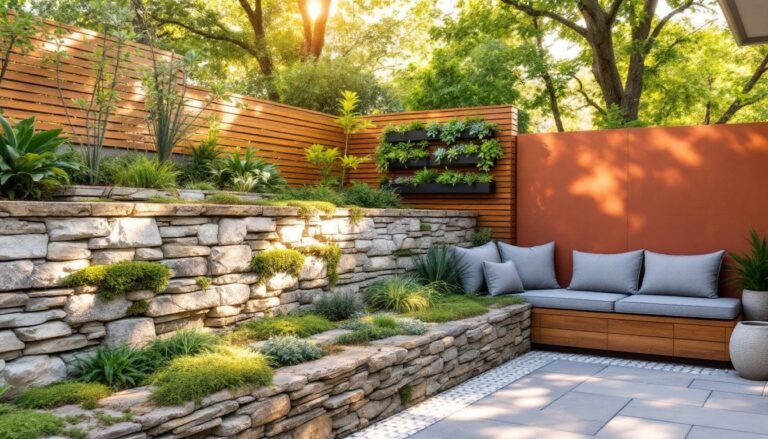
Louvered walls use angled slats to block sightlines while allowing airflow. Mount 1×6 or 1×8 cedar boards at a 45-degree angle on a frame of 2×4s. Space slats 1 to 2 inches apart. This design is ideal near grills or fire pits where ventilation matters. Homeowners looking to enhance patio design often integrate louvered screens for a cohesive look.
DIY pergola checklist:
- Lay out post locations, typically 8 to 10 feet apart.
- Dig footings below frost line (check local codes).
- Set posts in concrete, plumb and brace until cured (48 hours).
- Attach beams with lag screws or structural brackets.
- Add rafters on 16- to 24-inch centers, notching ends for decorative profiles.
- Finish with exterior stain or sealant.
Permit note: Structures over 120 square feet or those attached to the house often require building permits and inspections per the International Residential Code (IRC). Detached, open-roof pergolas under that threshold may be exempt, but always confirm locally.
Tool recommendations: A miter saw makes quick, accurate cuts for rafters and trim. A post-hole digger or auger (rentable for $40–$60/day) speeds footing work. Use a laser level for beam alignment across multiple posts.
Add Privacy Screens and Decorative Panels
Prefabricated screens and panels slot into tight spaces, frame views, and add instant privacy without permanent installation. They’re ideal for renters, patios, and backyard entertaining zones that need flexible boundaries.
Material options:
- Outdoor fabric screens: UV-resistant polyester or solution-dyed acrylic, mounted on aluminum frames. Retractable versions roll up when not needed. Expect $150–$400 for an 8×6-foot panel.
- Metal lattice: Laser-cut aluminum or steel in geometric patterns. Powder-coated finishes resist rust. Prices range $200–$600 per 4×8-foot panel. Mount to pressure-treated 4×4 posts or attach to deck railings with brackets.
- Bamboo reed fencing: Rolls of bamboo canes wired together, available in 6-foot heights and 8- to 16-foot lengths. Secure to existing fence rails or posts with zip ties or galvanized wire. Budget $30–$60 per roll. Lifespan is 3–5 years before UV degradation and splitting.
- Composite lattice: Resists rot and insect damage, mimics wood, available in 2×8-foot or 4×8-foot sheets. Frame with 1×2 trim and mount between posts. Cost around $40–$80 per sheet.
Installation tips: For freestanding screens, build a base frame from 2×4 pressure-treated lumber and secure to the ground with metal stakes or concrete deck blocks. If mounting to an existing deck, use lag screws into joists or posts, never just into deck boards, which won’t hold weight.
Wind resistance: Solid panels catch wind like sails. In exposed sites, use louvered or perforated designs, or anchor bases with concrete footings. Alternatively, some budget-friendly privacy ideas can be explored through resources highlighting garden privacy hacks that work under tight budgets.
Safety: Wear safety glasses when cutting metal or composite materials. Use a metal-cutting blade in a circular saw for aluminum (generates sparks, work away from flammables). For bamboo, a hand saw or reciprocating saw works fine.
Layer Multiple Privacy Solutions for Maximum Effect
The most effective privacy plans combine two or three methods. A single 6-foot fence may block ground-level views but leave upper-story windows exposed. Layering solutions addresses multiple sightlines, adds depth, and creates visual interest.
Example layering strategy for a patio:
- Perimeter: Install a 6-foot cedar fence along property lines.
- Mid-zone: Plant a row of clumping bamboo or arborvitae 3–4 feet inside the fence line for added height and softness.
- Focal screen: Place a decorative metal panel or pergola with climbing vines near seating areas to frame views and block specific angles.
This approach also buffers noise more effectively than a single barrier. Dense plantings absorb sound: solid fences reflect it. Combining both reduces overall decibel levels.
Maintenance considerations: Layered designs mean more upkeep. Budget time for pruning hedges, staining fences, and training vines. If maintenance is a concern, prioritize low-care materials, composite fencing, clumping bamboo, and evergreen varieties that need minimal shearing. For those integrating entertaining zones, tying privacy to cool backyard ideas keeps the space functional and stylish.
Cost-effective layering: Start with the most critical privacy gap (e.g., fence the side facing neighbors), then add plantings or screens incrementally as budget allows. Phasing work spreads costs and lets homeowners test solutions before committing fully.
Design balance: Avoid creating a fortress. Leave open sightlines toward appealing views (wooded areas, gardens, water features) and close off only problem angles. A mix of solid and semi-transparent screens maintains an airy feel.
For inspiration on layout and material pairings, sites like The Spruce and Hunker offer galleries and project walkthroughs that show layering in action. When done thoughtfully, layered privacy turns a backyard into a true outdoor room, enclosed enough for comfort, open enough to breathe.