Standing water in the yard isn’t just an eyesore, it’s a fast track to foundation damage, mosquito breeding grounds, and dead grass. Poor drainage can undermine hardscapes, rot deck footings, and turn a backyard into a swamp after every storm. The good news? Most drainage problems are fixable with the right approach, whether that’s routing water away with underground pipes, reshaping the grade, or turning a problem zone into a rain garden. This guide covers practical, proven drainage solutions that protect property and improve yard usability year-round.
Table of Contents
ToggleKey Takeaways
- Poor backyard drainage can cause $5,000–$15,000 in foundation damage repairs, so addressing standing water early is essential.
- French drains are the gold standard backyard drainage solution for chronic wet spots, using perforated pipes in gravel-filled trenches sloped at 1% grade to redirect water away from foundations.
- Dry creek beds and rain gardens offer eco-friendly backyard drainage ideas that beautify your landscape while reducing runoff and supporting native plants.
- Simple regrading with a 2% minimum slope can redirect water without pipes or trenches, though major changes over 12 inches typically require permits.
- Hardscapes like patios and decks amplify runoff, so install channel drains, permeable pavers, or extend downspouts to prevent erosion and water pooling against structures.
Why Proper Backyard Drainage Matters
Water follows the path of least resistance. When that path leads toward the house, garage, or a low-lying patio, trouble follows. Foundation damage from hydrostatic pressure is expensive, repairs often run $5,000 to $15,000 depending on severity and region. Chronic moisture also invites mold, wood rot, and termite activity.
Beyond the structure, poor drainage kills lawns, erodes soil, and creates hazardous ice patches in winter. Many municipalities require homeowners to manage stormwater on-site, especially in areas with combined sewer systems. Ignoring drainage isn’t just inconvenient: it can violate local ordinances and tank property value.
Safety gear for any drainage work: waterproof gloves, steel-toe boots, and eye protection. If digging near utilities, call 811 for a free utility locate before breaking ground.
French Drains: The Gold Standard for Yard Drainage
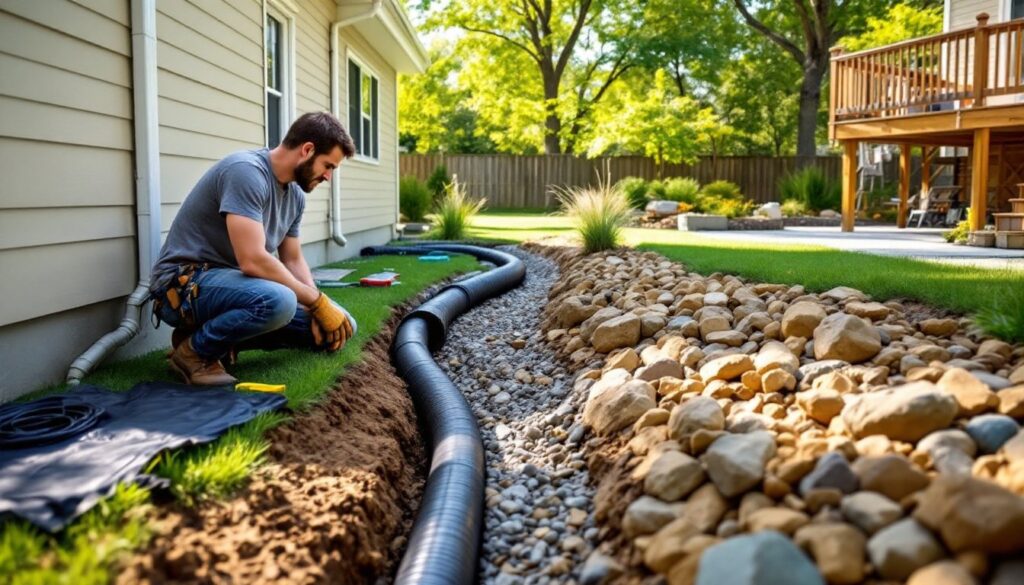
A French drain intercepts subsurface water and routes it away from problem areas using a gravel-filled trench and perforated pipe. It’s the most reliable solution for chronic wet spots, especially near foundations or downslope from hard surfaces.
How to Install a French Drain
- Dig the trench. Excavate 12–18 inches deep and 6–8 inches wide, sloping at least 1% grade (1 inch drop per 8 feet of run). Use a 4-foot level and string line to maintain slope.
- Line with fabric. Lay landscape fabric along the trench bottom and sides to prevent soil from clogging the pipe. Overlap seams by 6 inches.
- Add gravel base. Pour 2–3 inches of ¾-inch crushed stone.
- Place perforated pipe. Use 4-inch corrugated or PVC drain pipe, holes facing down. This filters water through gravel before it enters the pipe.
- Backfill with gravel. Cover the pipe with 3–4 inches of stone, then wrap fabric over the top.
- Top with soil or sod. Finish grade level or slightly crowned to shed surface runoff.
Discharge options: Drain to a daylight outlet (open end at a lower grade), dry well, or municipal storm drain if code allows. Never discharge onto a neighbor’s property.
Cost & permits: Materials run $8–$12 per linear foot for DIY: pro install is $20–$40/foot. Check local codes, some jurisdictions require permits for grading changes or connections to storm systems.
Dry Creek Beds for Functional Landscape Beauty
A dry creek bed mimics a natural streambed, channeling surface runoff through a decorative gravel and stone swale. It’s ideal for gentle slopes and visible drainage where aesthetics matter.
Building a Dry Creek Bed
- Map the channel. Use a garden hose to outline the path, following natural contours. Width should be 2–4 feet depending on flow volume.
- Excavate. Dig 6–10 inches deep, creating a shallow basin with gently sloped sides.
- Install underlayment. Lay landscape fabric to suppress weeds.
- Edge with large stones. Place 8- to 12-inch river rock or flagstone along borders for definition.
- Fill with gravel. Use ¾- to 1½-inch river rock or pea gravel for the bed. Vary stone sizes for a natural look.
- Add accent boulders. Nestle larger stones (12–24 inches) at bends and junctions.
Dry creek beds handle light to moderate runoff. For heavy flow, combine with an underground French drain beneath the gravel. Plant native grasses or sedges along edges to stabilize soil and enhance the look.
Maintenance: Rake gravel annually to redistribute stones and remove debris. Expect to top off material every few years as it settles.
Rain Gardens and Bioswales for Eco-Friendly Drainage
A rain garden is a shallow depression planted with native, water-tolerant species that absorb and filter stormwater. A bioswale is the linear version, often used along driveways or property edges. Both reduce runoff, recharge groundwater, and support pollinators.
Designing a Rain Garden
- Location: Place at least 10 feet from the foundation, in a naturally low area or where downspouts discharge.
- Size: Aim for 20–30% of the drainage area feeding it. A 1,000-square-foot roof typically needs a 200–300-square-foot rain garden.
- Depth: Excavate 4–8 inches deep with gently sloped sides (3:1 ratio).
- Soil mix: Amend heavy clay with compost or sand to improve infiltration. Water should drain within 24–48 hours to avoid mosquito breeding.
Plant Selection
Choose native perennials adapted to both wet and dry conditions:
- Blue flag iris
- Joe Pye weed
- Switchgrass
- Black-eyed Susan
- Swamp milkweed
Group plants by water tolerance: wettest in the center, drought-tolerant on the edges. Mulch with 2–3 inches of shredded hardwood to retain moisture and suppress weeds.
Maintenance: Rain gardens need regular weeding and mulch replenishment in the first two years. Once established, they’re low-maintenance. This approach integrates beautifully with outdoor entertaining spaces, adding both function and curb appeal.
Grading and Sloping Techniques for Simple Fixes
Sometimes the cheapest fix is reshaping the ground. Grading redirects water by adjusting soil slope, no trenches, pipes, or plants required.
Regrading Basics
- Target slope: 2% minimum (2 feet of fall per 100 feet). Aim for 5–10% near the foundation for positive drainage.
- Tools: Rent a box blade or landscape rake for large areas: use a hard rake and wheelbarrow for small jobs. A laser level speeds layout.
- Fill material: Use clean fill dirt or topsoil. Avoid organic-heavy mixes that settle over time.
Steps
- Remove sod. Strip and set aside if replanting.
- Add and spread fill. Mound soil near problem areas, feathering edges 10–15 feet out for a gradual transition.
- Compact. Tamp with a plate compactor or hand tamper in 2-inch lifts to prevent settling.
- Re-sod or seed. Water daily until established.
Permit note: Grading changes over 12 inches or within 10 feet of a property line often require a permit and may need engineer-stamped plans. Don’t assume minor work is exempt.
When to call a pro: If the yard drains toward the house and sits below street grade, fixing it may require a sump pump system or curtain drain, both best handled by a licensed contractor.
Drainage Solutions for Patios, Decks, and Hardscapes
Hardscapes concentrate runoff. A 400-square-foot patio sheds as much water as a small roof, so managing that flow is critical to preventing erosion and undermining.
Patio & Driveway Drainage
- Channel drains: Install a trench drain (linear grate system) at the low edge of a patio or across a driveway apron. Slope hardscape 1–2% toward the drain.
- Permeable pavers: Use permeable interlocking concrete pavers (PICP) with open joints filled with gravel. Water filters through rather than running off. Effective on slopes up to 8%.
- Catch basins: Place a grated catch basin at low points, connecting to underground drainage pipe. Use where water collects in corners or transitions.
Deck Drainage
Elevated decks shed water beneath, which can pool against footings. Solutions:
- Extend downspouts or gutters away from the deck perimeter.
- Install a French drain along the upslope side to intercept runoff before it reaches the deck.
- Use joist tape or deck flashing to protect wood framing from moisture intrusion.
Under-deck systems: Products like corrugated panels or vinyl membranes attach to joist undersides, channeling water to a gutter. These keep the area below dry and usable. Properly designed patio entertaining setups account for drainage from day one to avoid retroactive fixes.
Material note: Use Schedule 40 PVC or corrugated HDPE for buried drainage pipe. Avoid thin-wall “sewer and drain” pipe, it crushes under backfill.
Conclusion
Backyard drainage isn’t glamorous, but it’s foundational, literally. Whether installing a French drain along the foundation, regrading a soggy lawn, or building a rain garden that doubles as habitat, the goal is the same: move water away from structures and make the yard usable in all weather. Most drainage projects are within DIY reach with the right planning, tools, and a little sweat equity. For complex grading or structural concerns, bring in a pro. Either way, fixing drainage now prevents expensive repairs later.