A well-placed gazebo doesn’t just fill empty lawn space, it creates a defined outdoor room that anchors your yard’s design and function. Whether someone’s chasing shade on a scorching afternoon, looking for a weatherproof spot to host weekend dinners, or simply wanting a structural focal point to tie the landscape together, a gazebo delivers. This guide walks through practical gazebo designs, material choices, and finishing touches that turn a simple structure into the hardest-working feature in the backyard.
Table of Contents
ToggleKey Takeaways
- A well-designed gazebo creates a defined outdoor room that provides instant shade, protects furniture, and anchors your yard’s overall design without waiting years for landscaping to mature.
- Gazebo backyard ideas benefit from material selection: pressure-treated pine offers affordability, cedar provides natural decay resistance, while aluminum and vinyl deliver low maintenance at the cost of durability and permanence.
- Solid gazebo canopies block weather better than open-roof pergolas, and most residential freestanding structures don’t require home attachment, though local building codes and HOA restrictions should always be verified before installation.
- Create a functional outdoor dining space by sizing your table appropriately (60″ round for six, 72×36″ rectangular for eight), maintaining 36 inches of clearance around seating, and installing composite deck tiles or outdoor rugs for comfort.
- Transform your gazebo into an evening destination by layering lighting—overhead string lights for ambiance, low-voltage LED strips for refinement, and solar post caps for railings—all paired with foundation plantings and weather-resistant furnishings that match the structure’s scale.
- Integrate your gazebo into the landscape with foundation plantings, defined pathways, climbing vines on trellises, and outdoor curtains for privacy, ensuring the addition feels intentional and cohesive with your home’s existing style.
Why a Gazebo Is the Perfect Backyard Addition
Gazebos solve multiple problems at once. They provide instant shade without waiting years for trees to mature, protect outdoor furniture from sun damage and sudden rain, and add vertical architecture that breaks up flat yards.
From a functional standpoint, a gazebo defines zones. It separates lounging areas from play spaces, creates a natural gathering spot away from the house, and offers a sheltered platform for grills, dining sets, or hot tubs. Unlike pergolas, which have open-slatted roofs, gazebos feature solid or near-solid canopies that actually block weather.
Structurally, most residential gazebos are freestanding and don’t require ledger board attachment to the home, which simplifies permitting in many jurisdictions. That said, check local building codes before pouring footings. Structures over a certain square footage (often 120–200 sq ft) or height typically need permits, and some HOAs restrict style or placement. Wind load and snow load ratings matter, especially in regions with severe weather, undersized posts or inadequate anchoring can turn a gazebo into a liability.
Classic Wood Gazebo Designs for Timeless Appeal
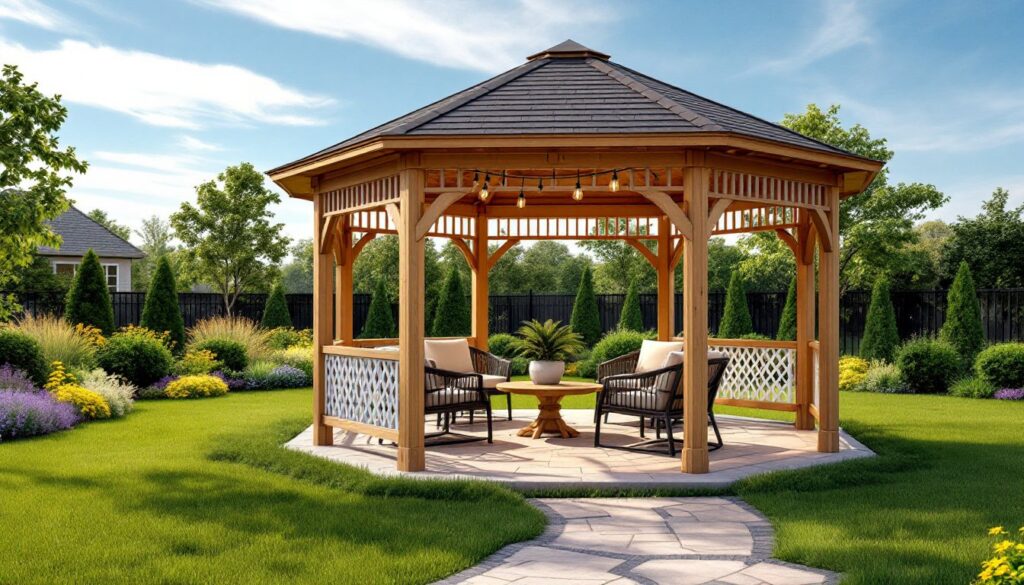
Pressure-treated pine and cedar dominate the wood gazebo market, and for good reason. Pressure-treated lumber (PT) resists rot and insect damage, comes in standard dimensions (4×4 posts, 2×6 rafters), and costs roughly 30–50% less than cedar. Cedar offers natural decay resistance, better dimensional stability, and weathers to a silver-gray patina without finish, but expect to pay a premium.
When sizing, an 8×10 or 10×12 footprint fits most backyards and comfortably seats six to eight people around a dining table. Octagonal designs are traditional and shed water well, but rectangular or square plans simplify framing and make furniture arrangement easier.
Framing a wood gazebo from scratch requires intermediate carpentry skills. Key steps include:
- Pour concrete footings below the frost line (depth varies by region, check IRC guidelines).
- Set 6×6 posts in post brackets anchored to footings with galvanized hardware.
- Frame the roof structure with a center hub or ridge beam, depending on style, and attach rafters at consistent spacing (typically 16″ or 24″ on center).
- Sheath the roof with ½” plywood or OSB, then install underlayment and asphalt shingles (250–300 sq ft coverage per square).
- Add railings (36″ height minimum per code), trim, and lattice if desired.
If that sounds daunting, prefab gazebo kits from manufacturers like Yardistry or Outdoor Living Today include pre-cut lumber, hardware, and instructions. Assembly still takes a full weekend with two people, but eliminates the guesswork. Homes with entertaining backyard designs often use wood gazebos as a central anchor point.
Modern Metal and Vinyl Gazebo Options
Aluminum and steel gazebos appeal to DIYers who want low maintenance and clean lines. Powder-coated aluminum resists rust, handles coastal humidity, and weighs far less than wood, making solo assembly more feasible. Steel frames offer better wind resistance but need quality finish to avoid corrosion. Many modern metal gazebos use polycarbonate or fabric canopy panels instead of shingled roofs, which reduces weight and allows diffused light.
Hardtop metal gazebos with galvanized steel roofs mimic the look of shingles and block 100% of rain, but they’re heavier and often require anchoring to a concrete pad or deck with lag bolts. Softtop models with UV-resistant fabric (polyester with PU coating) are portable and half the cost, but fabric wears out in 3–5 years depending on sun exposure.
Vinyl (PVC) gazebos are maintenance-free, no staining, no sealing, no rot. They’re typically sold as kits with snap-together posts and pre-assembled roof sections. The tradeoff: vinyl can’t support heavy loads (no hanging swings or planters), and it lacks the heft that reads as “permanent.” Vinyl works best for decorative or light-duty shade structures.
For installation, metal gazebos often use ground stakes or concrete anchor plates. If placing on a deck, through-bolt the posts to joists (not just decking boards) and add blocking beneath for load distribution. Always wear gloves when handling cut metal edges, sharp burrs are common.
Creating a Cozy Outdoor Dining Area Under Your Gazebo
A gazebo becomes a true outdoor room once you define its purpose. For dining, start with the table size: a 60″ round seats six comfortably, while a 72×36″ rectangular table fits eight. Leave at least 36 inches of clearance around the table so chairs can pull out without hitting posts or railings.
Flooring upgrades make a huge difference. Poured concrete is durable but hard on dropped dishes. Interlocking composite deck tiles (12×12″ or 24×24″) install over existing concrete or compacted gravel in an afternoon, provide a softer surface, and add visual warmth. For a budget option, outdoor rugs (polypropylene or recycled plastic) define the space and are easy to hose off.
Ceiling fans designed for wet locations (UL rating) improve airflow on muggy evenings. Mount a fan-rated electrical box to a structural beam, never just to roof sheathing, and run 12-gauge wiring if the fan has a light kit. If the gazebo isn’t near an outlet, consider hiring an electrician to run a dedicated circuit: DIY burial of UF-B cable requires trenching at least 18″ deep per NEC code.
Many backyard design ideas for entertaining pair gazebos with nearby grilling stations, so keep a 6-foot clearance from the grill to any combustible structure. Built-in benches with storage compartments can maximize seating without crowding the footprint.
Gazebo Lighting Ideas to Extend Evening Enjoyment
Lighting transforms a gazebo from a daytime shelter into an evening destination. String lights (Edison-style LED bulbs on 14- or 16-gauge wire) are the easiest install, drape them along the perimeter rafters or crisscross overhead. Use outdoor-rated bulbs (IP65 or higher) and a GFCI-protected outlet.
For more polished ambiance, recessed LED puck lights or linear strip lighting can tuck into the underside of roof beams or behind railings. Low-voltage LED systems (12V or 24V) are safer for DIY installation than 120V line-voltage fixtures. A plug-in transformer steps down household current: wire runs use landscape lighting cable (usually 12-2 or 14-2 stranded). Keep wire runs under 100 feet to avoid voltage drop.
Solar post cap lights work for railings and perimeter posts, no wiring required. They charge during the day and glow for 6–8 hours at night. Performance varies widely by brand: look for units with at least 15 lumens per cap for useful light, not just decoration.
Lanterns and flameless candles add a softer layer. Battery-powered LED lanterns with timers can sit on tables or hang from shepherd’s hooks. If running hardwired fixtures, hire a licensed electrician if you’re uncomfortable with service panel work or trenching: improper wiring is a leading cause of outdoor electrical fires. Homes with backyard patio entertaining ideas often layer lighting, overhead for tasks, perimeter for ambiance.
Landscaping and Decor Tips to Complement Your Gazebo
A gazebo sitting on bare lawn looks unfinished. Foundation plantings soften the base and integrate the structure into the yard. Plant evergreen shrubs like boxwood or dwarf Alberta spruce at the corners (space 18–24″ from posts), and fill in with perennials (hostas, daylilies, salvia) for seasonal color. If the gazebo is cedar, the natural tones pair well with purple and yellow blooms: white vinyl pops against deep greens and reds.
Pathways define access and keep foot traffic from wearing down grass. A 36-inch-wide path of flagstone, pavers, or decomposed granite leads the eye and handles wheelchair or stroller access. Edge the path with steel or aluminum landscape edging to prevent material spread.
Climbing plants like clematis or climbing roses can grow up gazebo posts for a cottage-garden look, but avoid aggressive vines (wisteria, trumpet vine) that can damage wood or clog gutters. Install a 2×2 trellis panel on the post and tie stems loosely with soft plant ties as they grow. According to Better Homes & Gardens, layering perennials with varying bloom times keeps visual interest from spring through fall.
For decor, outdoor curtains made from fade-resistant fabric (Sunbrella or similar) add privacy and block low-angle sun. Mount curtain rods with exterior-grade brackets (stainless or powder-coated steel) and use grommeted panels that slide easily. In windy areas, tie-backs or weighted hems prevent flapping.
Furniture selection should match the structure’s scale. Bulky sectional sofas overwhelm an 8×8 gazebo, while spindly bistro chairs get lost in a 12×16 space. Resin wicker or powder-coated aluminum furniture is weather-resistant and easy to move. Cushions should have removable, washable covers and high-density foam cores (not fiberfill, which clumps when damp).
Finally, consider the patio design surrounding your gazebo. A cohesive material palette, matching the gazebo roof shingles to your house, or echoing deck railing styles, makes the addition feel intentional, not tacked on. Resources like Hunker and Gardenista’s collection offer visual inspiration for marrying structure, plantings, and hardscape.
Conclusion
A gazebo isn’t just decorative, it’s a strategic investment in how a backyard functions. The right design, materials, and finishing details turn open lawn into a year-round destination. Start with a solid foundation (literally), choose materials that match your climate and maintenance tolerance, and layer in lighting, landscaping, and furnishings to make the space livable. With the structure in place, the rest is just fine-tuning.