There’s something undeniably magnetic about a crackling fire under open sky. A rustic fire pit anchors a country backyard, turning empty lawn into a gathering spot where conversations linger and marshmallows toast to perfection. Unlike sleek gas models or cookie-cutter kits, rustic fire pits lean into natural textures, fieldstone, weathered steel, reclaimed brick, that feel at home alongside pastures, woodpiles, and wide horizons. Whether someone’s starting from scratch or upgrading a tired fire ring, these ideas blend function with the raw, unpolished charm that defines country living.
Table of Contents
ToggleKey Takeaways
- Rustic fire pits leverage natural materials like fieldstone and reclaimed brick to create authentic, low-maintenance gathering spaces that require minimal permits or specialized hardware.
- Country backyard rustic fire pit ideas range from affordable DIY projects—such as stacked stone rings and galvanized stock tanks—that can be completed in a single weekend.
- Reclaimed materials like tractor wheel rims and antique firebrick offer both cost savings and character, with materials often sourced locally or at farm auctions for $20–$50.
- Proper site selection, non-combustible bases, and safety buffers of at least 10 feet from structures are essential to prevent fire hazards and comply with local codes.
- Pairing your fire pit with rustic seating—such as log benches, Adirondack chairs, or stone walls—transforms it into a functional entertainment hub that extends outdoor living season.
- Always use seasoned hardwood for clean burns, avoid pressure-treated or painted wood, and maintain a fire extinguisher and clear 10-foot radius of dry vegetation for safe operation.
Why Rustic Fire Pits Are Perfect for Country Backyards
Country properties tend to have two things in spades: space and a relaxed building aesthetic. Rustic fire pits capitalize on both. They’re visually forgiving, mismatched stones or slightly wonky edges add character instead of signaling shoddy work. Materials can often be sourced on-site or locally: fieldstone from a creek bed, boulders cleared during grading, or salvaged brick from an old barn foundation.
From a practical standpoint, rustic designs often skip the need for specialized hardware. A simple in-ground stone ring requires no welding, no gas lines, and no electrical hookups. It’s a weekend build, not a permitted structure (though local ordinances on open flames still apply, check setback distances from property lines and structures). The result? A fire feature that feels like it’s always been there, rooted in the landscape rather than plopped onto it.
Natural Stone Fire Pit Designs
Natural stone is the gold standard for rustic fire pits. Fieldstone, river rock, and stacked flagstone all weather gracefully and handle thermal cycling without cracking (unlike poured concrete, which can spall under high heat).
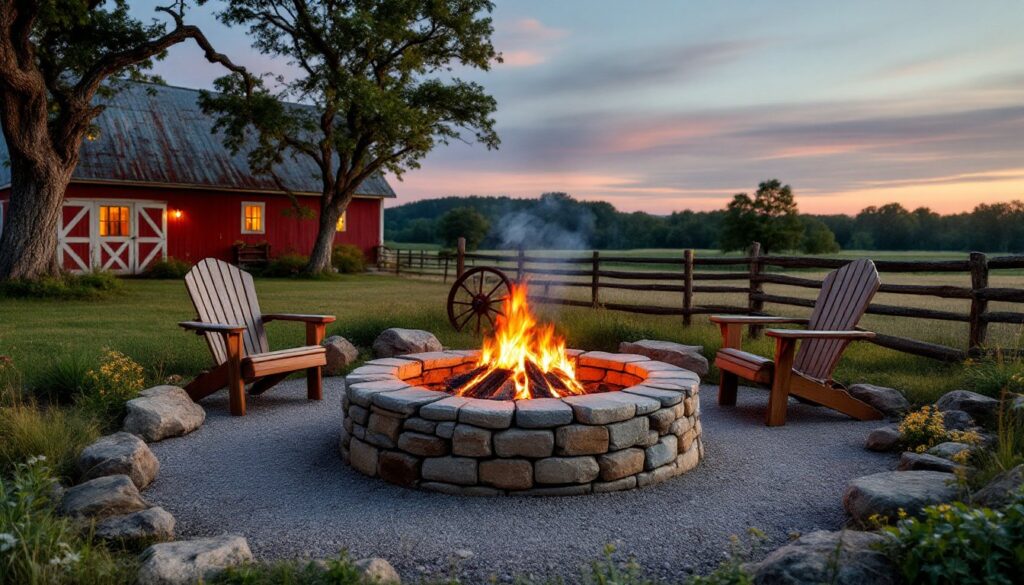
In-ground stone ring: Dig a circular pit 12–18 inches deep and 36–48 inches in diameter. Line the perimeter with large stones (50+ pounds each), dry-stacked or mortared with high-temp refractory mortar rated to 2000°F+. Backfill the exterior with gravel for drainage. This design works well on sloped terrain and keeps the fire low-profile, safer in windy areas.
Above-ground fieldstone wall: Stack stones 18–24 inches high, leaving gaps for airflow at the base. Use larger, flat stones as capstones. No mortar? That’s fine for a rustic aesthetic, but expect to reset stones occasionally as the ground shifts. Mortar adds stability and keeps embers from sneaking through gaps.
Flagstone fire pad with steel ring: For folks who want portability, lay a flagstone pad (4–6 feet across) and center a steel fire ring (36-inch diameter is standard). The stone base protects grass and provides a stable, level surface. Flagstone costs roughly $15–$25 per square foot installed, but DIYers can cut that in half by doing the labor.
Stone fire pits pair beautifully with backyard design ideas for entertaining, especially when combined with rustic seating arrangements.
Reclaimed Materials and Vintage-Inspired Fire Pits
Reclaimed materials bring instant patina and a story to tell. Old farm equipment, salvaged steel, and vintage brick all fit the rustic fire pit playbook, and they’re often cheaper than new materials.
Tractor wheel rim fire pit: A classic. Large steel rims (30–36 inches across) from old tractors or trucks make ready-made fire bowls. Clean off rust with a wire brush, treat with high-heat spray paint (1200°F+), and set on a gravel pad. Add three short steel legs welded underneath for elevation, or nestle it into a shallow stone ring. Cost: $20–$50 for a used rim at farm auctions or salvage yards.
Antique brick fire pit: Reclaimed brick, especially firebrick from old kilns or furnaces, handles heat better than modern clay brick. Stack in a circular or square pattern, 12–18 inches high, using refractory mortar. Leave a 4-inch gap at the base for airflow. Salvaged brick costs $0.50–$2 per brick, depending on condition and source. According to Better Homes & Gardens, reclaimed materials add authentic character that new products can’t replicate.
Steel culvert or drainage pipe section: Cut a 24–30-inch section from a large-diameter steel culvert (36–48 inches wide). Drill vent holes around the base (1-inch holes, spaced 6 inches apart) and set on a gravel or stone pad. The corrugated texture screams industrial-rustic. Use a reciprocating saw with a metal-cutting blade or an angle grinder for the cut. Wear safety goggles, heavy gloves, and ear protection, cutting steel is loud and throws sparks.
These vintage fire pit designs fit perfectly into any entertaining backyard design, adding functional warmth and conversation-starter aesthetics.
DIY Rustic Fire Pit Projects You Can Build This Weekend
Most rustic fire pits can go from concept to first fire in one or two days. Here are three beginner-friendly builds.
Stacked Stone Fire Pit (No Mortar)
Materials: 150–200 lbs of fieldstone or wall stone, landscape fabric, gravel, steel fire ring (optional).
Tools: Shovel, level, tamper, work gloves.
- Mark a 4-foot-diameter circle. Dig down 4 inches and line with landscape fabric.
- Fill with 2 inches of gravel: tamp flat.
- Dry-stack stones in a circle, 18–20 inches high. Nestle each stone into gaps below for stability. Use larger stones as the base layer.
- Drop a steel fire ring inside (optional but recommended, keeps logs contained).
- Backfill exterior with gravel to anchor the base.
Time: 3–4 hours. Skill level: Beginner.
Galvanized Stock Tank Fire Pit
Materials: Oval galvanized stock tank (70–100 gallons), gravel, steel fire ring.
Tools: Drill with 1-inch spade bit.
- Drill six 1-inch drainage holes in the tank bottom.
- Set tank in desired location (it’s heavy when filled, don’t plan on moving it).
- Fill bottom with 4 inches of gravel.
- Nestle steel fire ring inside.
Time: 1 hour. Skill level: Beginner. Stock tanks run $80–$150 depending on size and market. This rustic fire pit approach is simple, weather-resistant, and looks right at home on country properties.
Cinder Block and Capstone Fire Pit
Materials: 24 standard cinder blocks, 12 concrete capstones, high-heat construction adhesive, gravel.
Tools: Level, shovel, rubber mallet.
- Dig and level a 5-foot-square area: add 2 inches of gravel.
- Lay cinder blocks in a square or circular pattern, two blocks high. Stagger joints like brickwork.
- Bond layers with construction adhesive.
- Top with capstones for a finished edge.
Time: 2–3 hours. Skill level: Beginner. This design works well for square or rectangular pits and provides excellent thermal mass.
Seating and Landscaping Ideas to Complete Your Rustic Fire Pit Area
A fire pit without seating is just a hole in the ground. Rustic seating should be sturdy, low-maintenance, and comfortable enough for multi-hour sessions.
Log benches: Source logs 12–18 inches in diameter. Cut to 4–6-foot lengths, split in half lengthwise (flat side up), and set on gravel pads or short stone piers. Apply exterior wood stain or let them weather naturally. Cedar and locust resist rot better than pine.
Adirondack chairs: Classic, wide arms for drink-holding, and they lean back at the perfect angle for stargazing. Build or buy, kits start around $60 per chair.
Stone or block seating walls: Extend the fire pit perimeter into L-shaped or curved seating walls (18 inches high). Cap with flat stones or concrete capstones. Add outdoor cushions for comfort.
Landscaping around the pit: Define the area with a 10–12-foot diameter gravel or decomposed granite pad. This creates a fire-safe buffer and cuts down on mud. Edge with larger boulders or stacked stone. For a softer look, plant low ornamental grasses (like blue fescue or muhly grass) 5+ feet from the fire, far enough to avoid scorching. Designs like this complement patio backyard entertaining ideas and extend the usable season of outdoor spaces.
Overhead lighting: String Edison bulbs or solar lanterns on shepherd’s hooks around the perimeter. Skip anything with plastic components near the fire.
Safety Tips for Building and Maintaining Your Country Fire Pit
Rustic doesn’t mean reckless. Fire pits, even simple ones, require planning and ongoing attention.
Site selection: Place the pit at least 10 feet from structures, fences, and overhanging branches. Check local fire codes: some jurisdictions require 25-foot setbacks. Avoid low-lying areas where smoke pools or drainage collects.
Base and perimeter: Always build on a non-combustible base (gravel, stone, dirt, never wood decking or dry grass). Clear a 10-foot radius of leaves, pine needles, and dry vegetation. Keep a fire extinguisher (Class A, rated for wood) or a connected garden hose within reach.
Material caution: Never burn pressure-treated lumber, painted wood, or anything coated (releases toxic fumes). Stick to seasoned hardwood (oak, hickory, ash) for clean, long-burning fires. Avoid softwoods like pine, they spark heavily and build up creosote.
Wind awareness: Don’t light fires on windy days (sustained winds over 10 mph). Embers can travel 50+ feet and ignite dry grass or shingles. Those planning frequent gatherings should consider backyard celebration strategies that include weather contingency plans.
PPE during construction: Wear work gloves, safety goggles, and steel-toe boots when cutting stone, moving heavy materials, or operating power tools. Dust masks are smart when working with mortar or cutting cinder blocks (silica dust is a respiratory hazard).
Permits and inspections: Most simple fire pits don’t require permits, but gas-fed or permanent masonry structures often do. If in doubt, call the local building department. Better to ask than to tear out a finished pit.
Ash disposal: Let ashes cool completely (24+ hours), then transfer to a metal container with a lid. Never dump hot ashes in plastic bins or near combustibles. Resources from Southern Living emphasize safe ash handling as a key part of outdoor fire maintenance.
Conclusion
A rustic fire pit isn’t just a backyard feature, it’s a gathering point that turns chilly evenings into memorable nights. From stacked fieldstone to reclaimed tractor rims, the best designs are honest, functional, and built to last. With the right materials, a weekend of work, and attention to safety, anyone can create a fire pit that feels like a natural extension of the landscape. Now grab some firewood, stake out a spot, and get building.