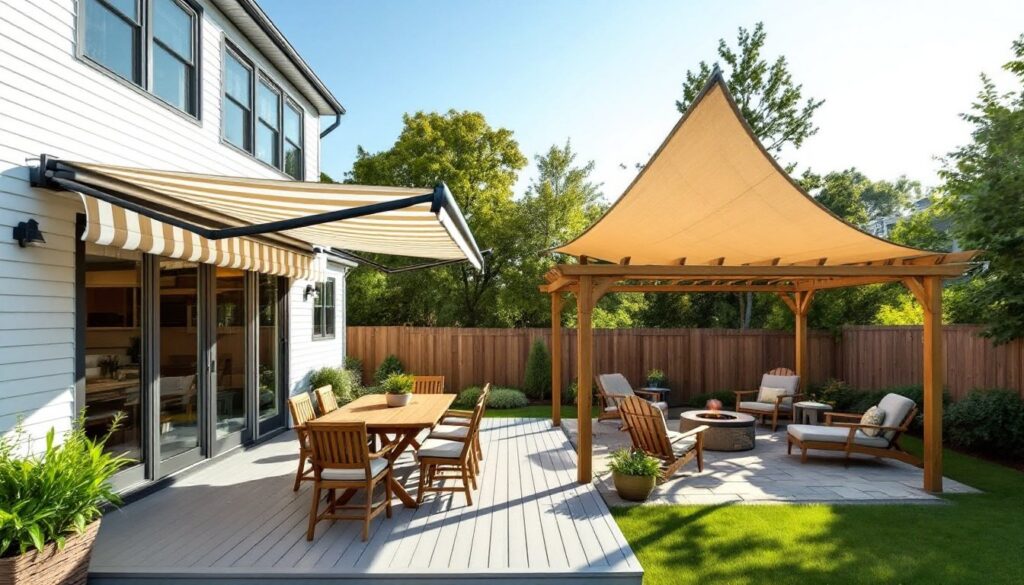
A blazing summer afternoon can turn a beautiful backyard into an oven. The right awning changes that, creating a shaded retreat where temperatures drop 15–20 degrees and outdoor living becomes comfortable again. Whether someone’s hosting weekend barbecues or just wants a cooler spot to read, awnings deliver practical shade while adding architectural character. From motorized retractables to budget-friendly DIY builds, there’s an awning solution for every yard size, style preference, and skill level. This guide walks through seven proven awning ideas, covering materials, installation considerations, and what works best for different spaces.
Table of Contents
ToggleKey Takeaways
- Backyard awning ideas range from motorized retractables ($1,500–$3,500) to budget-friendly DIY builds ($250–$600), with each option delivering 15–20 degree temperature reductions and enhanced outdoor comfort.
- Solution-dyed acrylic and HDPE fabrics are the best UV-resistant materials, blocking 85–98% of solar rays and lasting 5–10 years when properly maintained.
- Retractable awnings and shade sails require proper anchoring into wall studs or concrete footings rated for 200–400 pounds of tension to ensure safety and durability.
- Pergola-style awnings and hard-top gazebos offer permanent shade with architectural appeal, with prices ranging from $800–$3,500 depending on materials and installation.
- DIY awning projects using 2×4 lumber frames and polycarbonate panels can save 40–60% in costs while allowing customization for unique yard layouts and aesthetics.
- Ventilated, mildew-resistant fabrics and annual sealing of untreated wood are essential for extending awning lifespan in humid or wet climates.
Retractable Awnings for Flexible Coverage
Retractable awnings mount to the house fascia or wall and extend or retract with a crank handle or electric motor. They’re ideal for homeowners who want shade on demand without permanently altering the yard’s appearance.
Most residential retractables extend 10–14 feet from the mounting wall and provide 8–12 feet of lateral coverage. The frame is typically aluminum or galvanized steel, with acrylic or solution-dyed polyester fabric rated for UV resistance. Acrylic fabrics block 98% of UV rays and hold color better than untreated canvas.
Motorized models require a 120V GFCI-protected outlet within 6 feet of the unit. Manual crank versions cost $400–$1,200, while motorized systems with wind sensors and remote controls run $1,500–$3,500 installed. A wind sensor automatically retracts the awning when gusts exceed 20–25 mph, preventing frame damage.
Installation involves locating wall studs or rafters for lag bolt anchors, retractables generate significant lateral pull when extended. Most manufacturers specify minimum 2×6 blocking behind siding. If the fascia board is only 1×6 or 1×8, add backing before mounting brackets. This isn’t a project for vinyl or aluminum siding without proper reinforcement.
Safety note: Always wear eye protection when drilling overhead, and use a sturdy ladder with a helper to stabilize the awning during mounting.
Pergola-Style Awnings for Classic Elegance
A pergola awning combines the open structure of a traditional pergola with retractable fabric panels or fixed louvers. It’s a middle ground between full shade and dappled sunlight, and it integrates well with patio design schemes that emphasize natural materials.
Typical construction uses 4×4 or 6×6 posts set in concrete footings at least 12 inches in diameter and 36–48 inches deep (below frost line in cold climates). Crossbeams are 2×6 or 2×8 lumber, with rafters spaced 16–24 inches on center. Pressure-treated pine works for budget builds: cedar and redwood resist rot naturally and need no chemical treatment.
For shade, install retractable canopy fabric that threads through tracks mounted to the rafters, or use fixed polycarbonate panels. Canopy fabric (usually 180–250 GSM polyester) retracts via a cord-and-pulley system, allowing users to adjust shade throughout the day. Polycarbonate panels are permanent but let diffused light through, ideal for year-round coverage.
Pergola awnings require basic carpentry skills, a post-hole digger or auger, and a circular saw or miter saw for angled cuts. Budget $800–$2,000 for materials on a 10×12-foot structure. If attaching one side to the house (a lean-to pergola), use a ledger board lagged into wall studs or rim joist, with joist hangers for the rafters. Flashing above the ledger prevents water intrusion behind siding.
Shade Sails for Modern Outdoor Living
Shade sails are tensioned fabric panels anchored at three or four corners, creating a sculptural canopy that suits entertaining backyard designs with a contemporary aesthetic. They’re lightweight, affordable, and surprisingly durable when installed correctly.
Sails come in triangular, square, and rectangular shapes, ranging from 10×10 feet to 20×20 feet. High-density polyethylene (HDPE) fabric with UV stabilizers is standard, it blocks 85–95% of UV radiation and breathes enough to prevent heat buildup underneath. Edges are reinforced with double-stitched webbing, and corners have stainless steel D-rings.
Anchoring requires solid posts or attachment points. For freestanding installations, use 4×4 posts set 30–36 inches deep in concrete. Metal anchor plates or eye bolts embedded in concrete footings provide the strongest hold. Wall-mounted anchors should lag into studs or masonry, not siding alone. Each corner experiences 200–400 pounds of tension when the sail is properly tightened.
Install turnbuckles at each anchor point to adjust tension, the fabric should be taut but not over-stressed. A slight curve (about 1–2 inches of sag per 10 feet) is normal and helps water drain. Shade sails are popular for their versatility: according to outdoor design experts, they offer an adaptable cooling solution for yards with irregular layouts.
Cost: $150–$400 for a quality sail, plus $100–$300 for hardware and posts. Installation is DIY-friendly with a helper.
Canopy and Gazebo Awnings for Full Protection
When weather resistance matters more than aesthetics, a canopy or gazebo awning delivers full overhead coverage with optional sidewalls. These are freestanding structures, which makes them ideal for renters or homeowners who want portability.
Pop-up canopies with steel or aluminum frames and polyester tops are the most affordable option, $100–$500 for a 10×10-foot model. They assemble without tools and can be moved around the yard. But, standard-grade canopies won’t survive high winds or heavy snow. For permanent setups, look for hard-top gazebos with galvanized steel or powder-coated aluminum roofs. These handle rain, snow loads up to 20–30 PSF, and stay anchored in winds up to 40 mph when properly staked.
Hard-top gazebos require level ground and foundation anchors, concrete footings, ground screws, or lag bolts into an existing deck. Most kits include pre-drilled frames and modular panels that bolt together. Expect 6–10 hours of assembly time with two people.
For homeowners planning backyard gatherings, gazebo awnings create a defined entertaining zone with built-in mosquito netting and curtain options. They’re especially useful in regions with unpredictable weather.
Cost: $300–$1,000 for a soft-top gazebo: $1,200–$3,500 for hard-top models with rust-resistant frames and powder-coated finishes.
DIY Awning Projects on a Budget
Building a simple awning from scratch cuts costs by 40–60% and lets homeowners customize size, shape, and materials. Here are two approachable DIY builds:
Fixed Frame Awning
Construct a basic angled frame using 2×4 lumber for rafters and a ledger board attached to the house. Space rafters 16 inches on center, running from the ledger to a front beam supported by 4×4 posts. Cover with corrugated polycarbonate panels (about $2 per square foot) or outdoor fabric stapled to the frame.
Tools needed: Circular saw, drill/driver, level, post-hole digger, and framing square. Materials cost $250–$600 for an 8×10-foot awning. Polycarbonate is lighter than glass, UV-resistant, and available in clear or tinted sheets. Overlap panels by at least one corrugation and seal with butyl tape.
Drop Cloth or Tarp Awning
For temporary or seasonal shade, mount grommeted canvas drop cloths (available at hardware stores for $20–$40 in 9×12-foot sizes) between posts or along a fence line. Secure with paracord and adjust tension with knots or carabiners. It won’t last more than one or two seasons, but it’s ideal for renters or testing an awning layout before committing to a permanent structure.
Those looking for cool outdoor entertaining ideas can pair budget awnings with string lights and outdoor rugs to create inviting spaces without major investment.
Safety reminder: Always apply exterior-grade stain or sealant to untreated lumber to prevent rot and insect damage.
Choosing the Right Materials and Fabrics
Awning performance depends heavily on material selection. Here’s what matters:
Fabric Options
- Solution-dyed acrylic: Industry standard for retractable and pergola awnings. Color is bonded into fibers, not surface-applied, so it resists fading for 7–10 years. Blocks 98% of UV. Brands like Sunbrella are common but pricey: generic acrylics work fine if GSM (grams per square meter) is above 300.
- Polyester: Cheaper than acrylic but fades faster (3–5 years). Often PVC-coated for water resistance. Good for temporary or budget builds.
- HDPE mesh: Used in shade sails. Breathable, blocks 85–95% UV, and dries quickly. Lasts 5–8 years in full sun.
Frame Materials
- Aluminum: Lightweight, rust-proof, and low-maintenance. Best for retractables and modern designs.
- Galvanized steel: Heavier and stronger than aluminum. Resists corrosion but eventually rusts in coastal areas.
- Pressure-treated lumber: Affordable and easy to work with. Needs annual sealing in wet climates. Actual dimensions are smaller than nominal (a 4×4 is really 3.5×3.5 inches).
- Cedar/Redwood: Naturally rot-resistant, aesthetically warm, but costs 2–3 times more than treated pine.
Roofing Panels
- Polycarbonate: Corrugated or flat sheets. Lighter than glass, impact-resistant, and available in UV-blocking tints. Costs $2–$4 per square foot.
- Metal roofing: Corrugated steel or aluminum panels. Durable and weather-resistant but loud in rain. Use foam closure strips at panel edges to prevent insect entry.
Homeowners creating outdoor entertaining spaces should prioritize fabrics rated for mildew resistance in humid climates. Ventilated fabrics prevent condensation and extend lifespan.
Conclusion
The right awning turns a sun-scorched patio into a functional extension of the home. Retractable models offer flexibility, pergolas add architectural interest, and shade sails deliver modern flair, each fits different budgets, skill levels, and aesthetic goals. Focus on proper anchoring, quality UV-resistant fabrics, and realistic planning around installation complexity. Whether opting for a DIY canvas build or a motorized retractable, the payoff is immediate: cooler temps, protected furniture, and a backyard that’s actually usable from June through September.