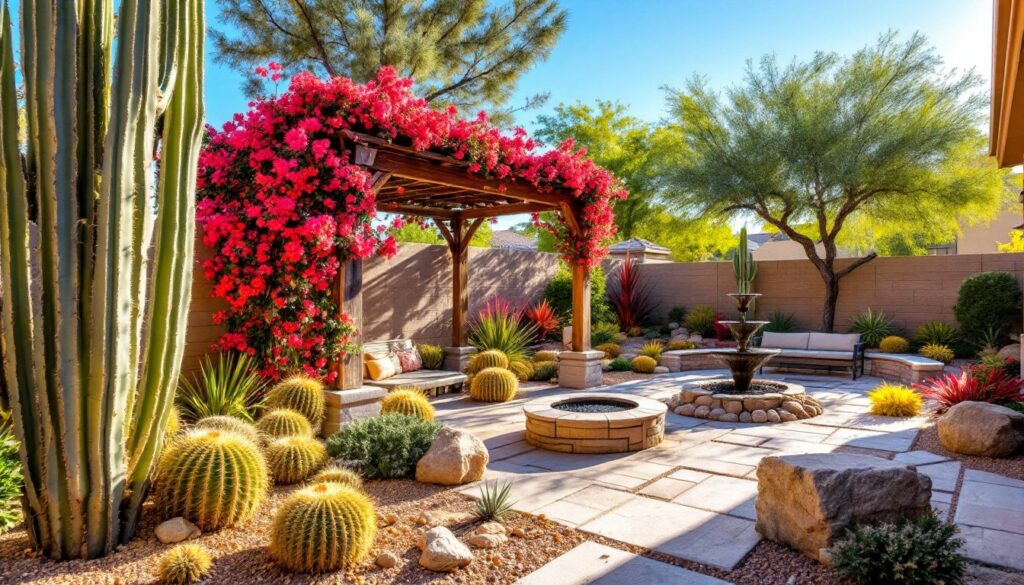
Transforming a backyard into a desert oasis isn’t about fighting nature, it’s about working with it. Whether dealing with scorching summers, limited water access, or sandy soil, desert landscaping offers a practical, low-maintenance approach that’s visually striking without the constant upkeep of traditional lawns. This guide walks through plant selection, hardscaping, outdoor living spaces, and budget-friendly projects that thrive in arid climates. No fluff, just actionable strategies for creating a backyard that looks intentional and holds up under harsh conditions.
Table of Contents
ToggleKey Takeaways
- Desert backyard ideas reduce water consumption by up to 75% compared to traditional lawns while eliminating constant mowing and seasonal replanting.
- Native and drought-tolerant plants establish quickly and thrive with occasional deep watering instead of frequent irrigation, making desert landscaping a low-maintenance solution.
- Hard landscaping with flagstone, decomposed granite, and boulders provides durable, long-lasting elements that withstand extreme temperatures and require minimal upkeep.
- Shade structures like pergolas and ramadas are essential for creating functional outdoor living spaces that account for sun exposure and temperature extremes.
- Several DIY-friendly desert backyard projects—including decomposed granite pathways, gravel planting beds, and fire pits—cost between $100–$300 and can be completed over a weekend.
- Recirculating water features with timers minimize evaporation and waste while adding a cooling visual effect without excessive resource use.
Why Desert Landscaping Is Perfect for Your Backyard
Desert landscaping, often called xeriscaping, cuts water use by up to 75% compared to traditional grass lawns. In regions where water restrictions are common or utility costs climb during summer, that’s a significant savings. Beyond the financial benefit, desert landscapes require far less mowing, fertilizing, and seasonal replanting.
Native and drought-tolerant plants have evolved to handle temperature swings, poor soil, and minimal rainfall. They don’t need the constant babysitting that non-native ornamentals demand. Once established (usually within a year), most desert plants thrive with occasional deep watering rather than frequent shallow irrigation.
From a design standpoint, desert landscaping offers texture and color that shifts with the seasons, blooming ocotillo in spring, golden barrel cacti year-round, and purple-hued evening primrose in cooler months. The aesthetic is clean, sculptural, and modern, which pairs well with contemporary architecture or rustic adobe-style homes.
One caveat: initial installation can be more expensive than sod. Boulders, decomposed granite, and mature cacti cost more upfront, but the trade-off is decades of low maintenance and no need for constant replacement.
Choosing the Right Desert Plants and Succulents
Selecting plants isn’t just about picking what looks good at the nursery. Consider mature size, growth rate, water needs, and whether the species is native to the region. Native plants are adapted to local soil and climate, which means less intervention down the line.
Top Desert Plant Choices:
- Agave: Low water, dramatic form. Varieties like Agave americana can reach 6 feet wide. Allow plenty of space.
- Palo Verde: A small tree (15-25 feet) with green bark that photosynthesizes, reducing leaf loss in drought. Provides filtered shade.
- Desert Marigold: Bright yellow blooms, self-seeds, tolerates extreme heat. Great for adding seasonal color.
- Ocotillo: Tall, spiny stems that leaf out after rain. Not a true cactus but looks the part.
- Red Yucca: Produces coral-pink flower spikes. Thrives in poor soil and full sun.
- Barrel Cactus: Slow-growing, requires almost no care once established. Watch for sharp spines near walkways.
When planting, dig holes twice as wide as the root ball but no deeper. Desert soils often have caliche (a hardpan layer), so break through it with a pick mattock if needed. Amend with a light layer of compost, but don’t over-improve the soil, plants need to adapt to native conditions.
Space plants according to their mature spread, not their nursery size. Crowding leads to competition for water and poor airflow, which invites pests. Mulch with 2-3 inches of decomposed granite or small pebbles to reduce evaporation and suppress weeds.
Creating Functional Outdoor Living Spaces
A desert backyard isn’t just for looking at, it’s for using. Outdoor living spaces need to account for sun exposure, wind, and temperature extremes. Shade structures are non-negotiable unless the goal is to turn the patio into a solar oven.
Pergolas provide partial shade and work well with climbing vines like bougainvillea or desert honeysuckle. Use pressure-treated lumber or naturally rot-resistant woods like cedar or redwood. Metal pergolas (steel or aluminum) handle heat without warping but get hot to the touch in direct sun.
Ramadas, traditional Southwestern open-roofed structures, are another option. They typically use mesquite poles or rough-sawn lumber and can be covered with reed fencing or shade cloth rated at 70-90% UV block.
For seating areas, consider built-in benches using stacked flagstone or concrete block with a capstone. They’re permanent, require no maintenance, and won’t blow away in windstorms. Add outdoor cushions that are UV-resistant and store them during monsoon season to prevent mildew.
Outdoor kitchens or bars, like those seen in entertaining backyard designs, work well in desert climates since cooking outdoors keeps heat out of the house. A simple setup with a built-in grill, stone countertop, and mini fridge is enough for most gatherings. Plumb in a water line if possible: hauling ice gets old fast.
Fire pits extend usability into cooler months. Use a steel ring or stacked stone with a fire-rated liner. Check local fire codes, some municipalities restrict open flames during high fire danger.
Incorporating Natural Stone and Desert Hardscaping
Hardscaping defines the bones of a desert backyard. Stone, gravel, and pavers hold up better than wood or mulch, which decompose quickly under intense sun and sporadic rain.
Flagstone is a go-to for patios and walkways. It’s durable, slip-resistant, and comes in earth tones that blend with desert surroundings. Lay it in a sand-set or mortar-set installation depending on traffic. Sand-set allows for easier repairs: mortar-set handles heavy use and furniture better.
Decomposed granite (DG) is a budget-friendly ground cover. It compacts well, drains quickly, and costs around $40-60 per cubic yard. Spread it 3-4 inches deep and compact with a plate compactor or hand tamper. Stabilized DG (mixed with a polymer binder) resists erosion and stays put on slopes.
Boulders add visual weight and break up flat expanses. Source locally if possible, shipping large stone gets expensive. Place them in odd-numbered groups (3 or 5) and vary sizes for a natural look. Bury the bottom third to make them look grounded, not dropped.
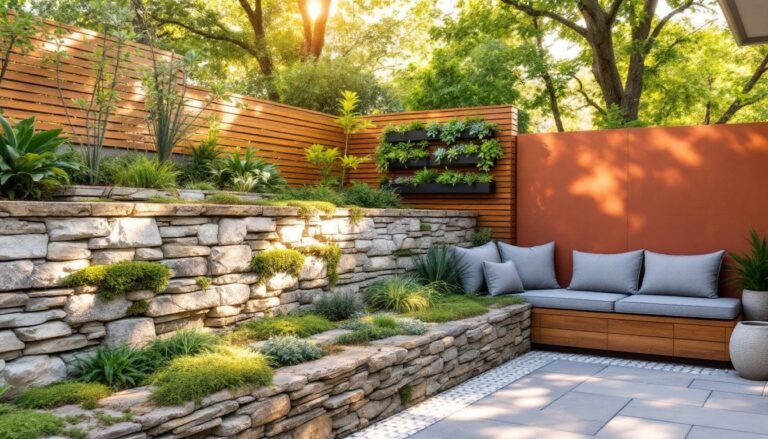
For retaining walls or raised planters, use dry-stacked stone (no mortar) or concrete block faced with stone veneer. Dry-stacked walls under 3 feet typically don’t require engineering, but taller walls need footings and may need a permit, check local codes.
Edging is crucial to keep gravel and DG from migrating into planting areas. Use steel edging (1/8-inch thick, 4-6 inches tall) or mortared stone borders. Plastic edging warps in heat and looks cheap within a year.
Consider the patio design carefully, since poorly planned hardscaping is expensive to redo. Slope surfaces 2% away from structures to prevent water pooling near foundations.
Water Features That Work in Desert Climates
Water features in the desert might seem counterintuitive, but they’re feasible with smart design. The key is recirculating systems that minimize evaporation and waste.
Bubbling rock fountains are low-maintenance and use a small pump to cycle water through a drilled boulder or stacked stone. They lose less water to evaporation than open ponds and require a reservoir basin (often a plastic liner buried underground) and a submersible pump. Expect to top off the reservoir weekly during peak summer.
Urn or pot fountains work similarly and come in ceramic, concrete, or metal. Position them in partial shade to reduce evaporation. Use a fountain cover or turn off the pump during windy days, wind accelerates water loss.
Small ponds are possible but demand more upkeep. Install a quality liner (45-mil EPDM rubber is standard), add a skimmer and pump, and use aquatic plants to shade the surface and reduce algae. Avoid koi or goldfish unless prepared to manage water temperature, fish struggle when water exceeds 85°F.
Avoid spray or misting features in windy areas. They waste water and create mineral deposits on surrounding hardscape. Drip irrigation for plants is far more efficient than decorative misters.
According to design inspiration from desert gardens, incorporating water elements thoughtfully can create a cooling visual effect without excessive resource use. Always use a timer and check for leaks monthly, a small leak in a recirculating system can drain the reservoir in a day.
Budget-Friendly Desert Backyard Projects You Can DIY
Desert landscaping doesn’t have to blow the budget. Several high-impact projects are DIY-friendly with basic tools and a weekend.
1. Decomposed Granite Pathways
- Materials: Decomposed granite, landscape fabric, steel edging
- Tools: Shovel, rake, plate compactor (rent for ~$60/day), tin snips
- Steps: Mark path, excavate 4 inches, install edging, lay fabric, spread and compact DG in 2-inch lifts
- Cost: ~$100-150 for a 20-foot pathway
2. Gravel and Stone Planting Beds
- Replace grass with gravel mulch and clustered plantings. Dig out turf (rent a sod cutter if the area is large), install landscape fabric, and top with 3-4 inches of decorative rock (river rock, lava rock, or pea gravel).
- Cost: ~$200-300 for 200 square feet, depending on rock type
3. DIY Shade Sail
- Shade sails (heavy-duty fabric panels tensioned between posts) block sun and add a modern look. Use galvanized steel posts set in concrete, mount turnbuckles at corners for tension adjustment.
- Cost: ~$150-300 depending on size and fabric grade. Look for UV-rated polyethylene with at least 90% shade factor.
4. Fire Pit with Stacked Stone
- Use concrete retaining wall blocks or natural stone in a circle 36-48 inches in diameter. Dig out 4-6 inches of soil, add a gravel base, stack stone without mortar (allows drainage), and line with a steel fire ring.
- Cost: ~$100-200
- Note: Check local fire codes. Some areas require a spark screen or specific clearance from structures.
5. Cactus and Succulent Container Gardens
- Large ceramic or concrete pots filled with a mix of cacti, agave, and trailing succulents make bold focal points. Use a cactus potting mix (or add perlite and coarse sand to standard potting soil at a 1:1 ratio).
- Cost: ~$50-100 per large container setup
For families looking to balance desert landscaping with play areas, integrating sections from a child-friendly backyard can provide safe zones for kids without sacrificing the desert aesthetic. A small patch of artificial turf or a gravel play zone with shade can coexist with native plantings.
Safety reminder: Wear leather gloves when handling cacti and thorny plants, and always use eye protection when cutting metal edging or using power tools.
Conclusion
Desert landscaping is a practical, low-maintenance approach that works with the climate instead of against it. By choosing the right plants, incorporating durable hardscaping, and building functional outdoor spaces, homeowners can create a backyard that’s both beautiful and resilient. Start with one project, whether it’s a gravel pathway, a new planting bed, or a simple fire pit, and build from there.