A backyard without proper lighting is a missed opportunity. Come dusk, that carefully landscaped space, deck, or patio you’ve poured time and money into disappears into darkness, and so does your ability to use it. Good outdoor lighting extends livability, adds security, and highlights what you’ve built. It can turn a plain yard into something you actually want to spend time in once the sun sets. Whether you’re lighting pathways for safe navigation, illuminating a seating area for evening conversation, or adding drama to garden features, the right setup makes a measurable difference. This guide walks through practical backyard lighting options, from the wiring you’ll need to consider to the fixtures that hold up in weather, so you can plan and execute with confidence.
Table of Contents
ToggleKey Takeaways
- Backyard light ideas range from string lights and pathway lighting to deck fixtures and uplighting, each serving specific purposes from ambiance to safety.
- Low-voltage landscape lighting systems are DIY-friendly, cost-effective, and require burying cable just 2-3 inches deep with proper waterproof connectors for durability.
- LED fixtures are the most energy-efficient choice, using 75% less energy than incandescent bulbs and lasting 25,000-50,000 hours, making them ideal for outdoor applications.
- Proper spacing and installation techniques matter: pathway lights should be placed 8-10 feet apart, and uplighting works best with narrow-beam spotlights (15°-30°) positioned 12-24 inches from structures.
- Layer different fixture types—ambient, task, and accent lighting—to create a polished outdoor space that extends livability and adds security long after sunset.
- Solar lights work best only in areas with 6-8 hours of direct daily sun; for consistent, dependable output in shaded yards, low-voltage LED systems outperform solar alternatives.
String Lights for Ambient Backyard Atmosphere
String lights are the simplest way to add atmosphere without heavy electrical work or big budgets. They cast a soft, diffused glow that’s less about visibility and more about mood, perfect for seating areas, pergolas, or fence lines.
For outdoor use, look for commercial-grade string lights with rubber or silicone sockets and 14- to 16-gauge wire. These hold up better than indoor Christmas lights and won’t crack after one season of UV exposure and rain. Bulbs come in incandescent, LED, or Edison-style filament options. LEDs last longer and use far less power, but incandescent Edison bulbs deliver that warm, vintage look many homeowners want.
Installation is straightforward: run the cable between supports using screw-in cup hooks or guide wire (a tensioned steel cable that keeps string lights from sagging). If you’re spanning more than 15 feet between posts, guide wire is worth the effort. Attach it with turnbuckles at each end to maintain tension.
Power needs depend on total wattage. A 25-bulb incandescent strand pulls around 175 watts: LED equivalents draw closer to 25 watts. Run your calculation, then plug into a GFCI-protected outdoor outlet. If you don’t have one nearby, hire an electrician to install one, this is not the place to run an extension cord permanently through a window.
String lights work best for entertaining outdoor spaces where ambiance matters more than task lighting.
Pathway and Landscape Lighting for Safety and Style
Path lights and landscape lighting serve dual purposes: they guide foot traffic safely and highlight plantings, hardscape edges, or architectural features.
Low-voltage systems (12V) are the DIY-friendly standard for landscape lighting. They run on a transformer that plugs into a standard 120V outdoor outlet and steps down the voltage, reducing shock risk and allowing use of smaller, more flexible cable. Most transformers include a timer or photocell for automatic operation.
Path lights should be spaced 8 to 10 feet apart along walkways, alternating sides for even coverage without creating a runway effect. Fixtures should be at least IP65-rated (dust-tight and water-resistant) and made from cast aluminum, copper, or stainless steel, plastic housings yellow and crack.
Bury the low-voltage cable 2 to 3 inches deep using a flat spade or edging tool. Leave a little slack at each fixture for future adjustments. Use waterproof wire connectors, not twist-on caps, to join cables.
For plants and trees, well lights (recessed into the ground) and bullet lights (adjustable spotlights on stakes) are common choices. Position them to graze foliage from below or cast shadows on walls, this adds depth and drama after dark.
Spotlight and Uplighting Techniques
Uplighting directs light from ground level upward, creating shadows and emphasizing vertical elements like tree trunks, architectural columns, or textured walls. It’s a technique borrowed from commercial and landscape design professionals to add dimension.
Use narrow-beam spotlights (15° to 30° beam angle) for tall trees or structures. Flood lights (60° to 90°) work better for wide shrubs or spreading canopies. Place the fixture close to the base of the object, 12 to 24 inches away, and aim it upward at a slight angle.
Avoid aiming lights directly at windows or neighboring properties. And keep wattage reasonable: 3 to 5 watts LED is plenty for most uplighting tasks. Overlighting creates glare and looks amateurish.
Deck and Patio Lighting Solutions
Decks and patios need functional lighting, enough to cook, eat, and move around safely, but without turning the space into a floodlit parking lot.
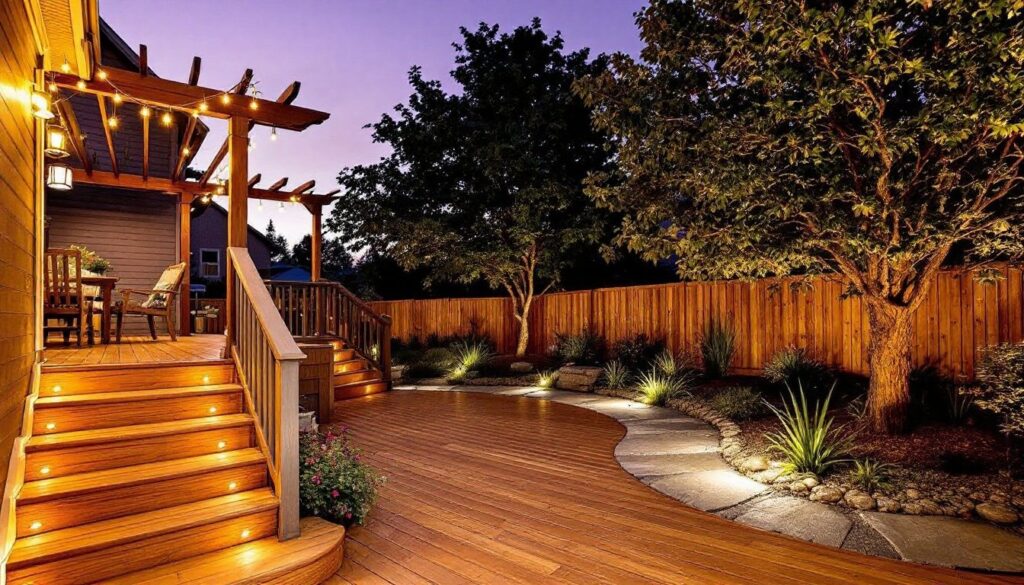
Recessed deck lights install flush with the deck surface, usually in post caps, stair risers, or fascia boards. They’re low-profile and hard to trip over. Standard sizes are 2-inch or 4-inch diameter. Use LEDs rated for wet locations to avoid early failure from moisture infiltration.
If you’re building a new deck, plan for lighting during framing. Run low-voltage cable through the joist bays before decking goes down. Retrofitting is possible but messier, you’ll need to fish cable under boards or surface-mount it.
Post-cap lights sit on top of deck railing posts and provide downward illumination. They’re easy to install (most just screw or slide onto the post) and come in solar or low-voltage versions. Solar works if the posts get direct sun most of the day: otherwise, you’ll get dim, unreliable output.
For overhead coverage, consider flush-mount ceiling fixtures or pendant lights on a covered patio. These need to be wired into a 120V circuit with a weatherproof junction box. If you’re not comfortable with house wiring and breaker panels, hire a licensed electrician. This is especially true if you’re adding a new circuit, NEC code requires GFCI protection for all outdoor receptacles and most outdoor lighting circuits.
Under-rail strip lighting is another option gaining traction. LED tape or rigid strips mount under the top rail and wash the deck surface with indirect light. It’s subtle and modern, but make sure the strips are rated IP65 or higher and use an outdoor-rated driver or transformer.
For patios, think about patio design early so that lighting integrates cleanly.
Solar-Powered and Energy-Efficient Options
Solar lights are tempting: no wiring, no electrician, and zero operating cost. But they’re not a universal solution.
Solar fixtures work best in areas with consistent, direct sun, at least 6 to 8 hours per day. In shaded yards or regions with short winter days, performance drops sharply. Battery capacity and panel size matter. Cheap solar lights use small NiMH batteries and tiny panels that can’t hold a charge past midnight. Better models use lithium-ion batteries and larger panels, delivering 6 to 10 hours of runtime.
Solar path lights are practical for low-traffic areas where dim lighting is acceptable. Solar spotlights and string lights exist, but brightness and reliability lag behind wired equivalents. If you want consistent, dependable output, low-voltage LED systems outperform solar every time.
For energy efficiency in wired systems, LED fixtures are the only sensible choice. They use 75% less energy than incandescent bulbs, run cooler, and last 25,000 to 50,000 hours. That’s 15 to 25 years at typical outdoor use rates.
Pair LEDs with a smart transformer or photocell timer to automate operation and avoid lights running during daylight. Some systems integrate with smart home platforms for app control and scheduling.
Don’t overlook motion sensors for areas that don’t need constant lighting, like side yards or entertaining spaces used only occasionally. They reduce runtime and add a security benefit.
Statement Lighting Fixtures and Decorative Touches
Sometimes you want lighting that does more than illuminate, it becomes a focal point itself.
Lanterns, pendants, and chandeliers designed for outdoor use add style and personality. Look for fixtures with powder-coated finishes or marine-grade materials like brass or stainless steel. Cheap paint and thin metal won’t last a season in humid or coastal climates.
Hanging fixtures work well over dining tables, outdoor kitchens, or seating areas under pergolas or covered patios. Make sure they’re rated for damp or wet locations depending on exposure. Damp-rated fixtures are fine under a roof: wet-rated is required if they’ll see direct rain.
Tiki torches and fire features aren’t electric, but they’re worth mentioning. They provide both light and heat, and they’re popular for backyard celebrations and casual entertaining. Use citronella fuel to add mosquito deterrent, or go with propane or natural gas for cleaner burn and easier refueling.
LED strip lighting in color-changing or tunable white can create effects for parties or holidays, but don’t overdo it, novelty wears off fast, and you’ll want something livable for everyday use. Keep the installation clean with proper channels or diffusers to hide the individual diodes and create a smooth light line.
According to outdoor lighting experts, layering different fixture types, ambient, task, and accent, produces the most polished result.
For decorative touches, consider bistro lighting as an alternative to traditional string lights, or install bollard lights along garden beds for a clean, contemporary look.
Conclusion
Outdoor lighting isn’t a one-size-fits-all project. The right approach depends on how the space gets used, what electrical access exists, and how much time and money are on the table. Start with safety and function, light pathways and entry points first. Then layer in ambient and accent lighting to add character. Whether it’s low-voltage landscape fixtures, recessed deck lights, or simple string lights on guide wire, focus on quality components and proper installation. Good lighting pays off in extended use, better curb appeal, and fewer tripped-over hoses after dark.