
Imagine walking into a room that feels as bright as your future, all thanks to LED lighting systems. These little wonders don’t just light up spaces; they save energy and money while giving your home or office a modern flair. With their long lifespan and vibrant colors, LEDs make traditional bulbs look like they’re still stuck in the Stone Age.
Overview of LED Lighting Systems
LED lighting systems have gained popularity due to their efficiency and versatility. These systems provide bright illumination while reducing energy consumption.
What Are LED Lighting Systems?
LED lighting systems consist of light-emitting diodes, converting electricity into light. These diodes operate through electroluminescence, producing light when an electric current passes through. Unlike traditional incandescent bulbs, they emit minimal heat and offer a longer lifespan, averaging 15,000 to 50,000 hours. The technology behind LEDs allows for various colors and brightness levels, enabling customization for different environments.
Common Applications
LED lighting finds use in numerous settings, making it a versatile option. Homes utilize LED bulbs in multiple fixtures, from recessed lighting to decorative lamps. Commercial spaces also benefit, particularly in retail stores, where they highlight products effectively. Outdoor applications include street lighting and landscape illumination, showcasing efficiency and durability. Additionally, architectural lighting employs LEDs to accentuate building features, enhancing visual appeal.
Benefits of LED Lighting Systems
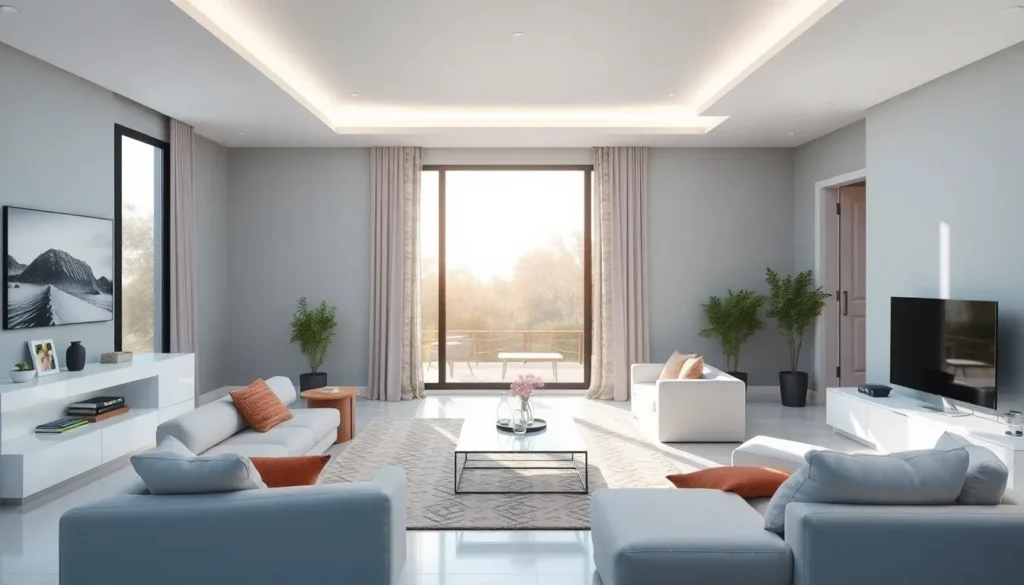
LED lighting systems offer numerous advantages that contribute to their growing popularity. These benefits include energy efficiency, longevity, and durability.
Energy Efficiency
Energy efficiency stands out as a primary benefit of LED lighting systems. LEDs consume up to 80% less energy compared to traditional incandescent bulbs, translating into significant savings on electricity bills. These systems produce more light per watt, resulting in a higher lumen output without requiring additional power. Moreover, advancements in technology have further improved efficiency, making LEDs an attractive option for both residential and commercial use. With lower energy consumption, users can reduce their carbon footprint while maintaining optimal illumination in their spaces.
Longevity and Durability
Longevity and durability rank high among the advantages of LED lighting systems. Lifespans for these systems typically range from 15,000 to 50,000 hours, far surpassing the 1,000-hour average of incandescent bulbs. This extended lifespan means fewer replacements and lower maintenance costs over time. Additionally, LED fixtures are built to endure various environmental conditions, making them suitable for diverse applications, including outdoor settings. Their resistance to shock, vibration, and extreme temperatures adds to their appeal, as they provide reliable illumination in various scenarios.
Types of LED Lighting Systems
LED lighting systems come in various types, each tailored for specific applications. Understanding these options enables informed choices based on needs and environments.
Residential LED Fixtures
Residential LED fixtures include recessed lights, pendant lights, and sconces. These fixtures enhance a home’s ambiance while providing efficient lighting. Recessed lights offer a sleek ceiling appearance, creating an unobtrusive look in living rooms and kitchens. Pendant lights serve as striking focal points above kitchen islands or dining tables, adding style and brightness. Wall sconces illuminate hallways and entryways, merging functionality with aesthetics. Homeowners benefit from lower energy costs and extended lifespans, averaging between 15,000 to 50,000 hours.
Commercial LED Solutions
Commercial LED solutions cater to a range of business environments, including offices and retail spaces. Tube lights provide even illumination in offices, promoting productivity and reducing eyestrain. Track lighting highlights merchandise in retail stores, enhancing visual appeal and customer engagement. Street lights utilize LED technology to improve safety and visibility in outdoor areas, contributing to energy savings for municipalities. These systems achieve significant reductions in energy consumption, lowering operational costs and maintenance needs.
Smart LED Lighting
Smart LED lighting integrates technology for enhanced functionality and control. User-friendly apps allow for convenient customization of brightness and color temperature, catering to different moods and activities. Featuring features like scheduling and remote accessibility, these systems promote energy efficiency by allowing users to turn off lights when not in use. Dimmable options create versatile atmospheres suitable for various occasions, from movie nights to dinner parties. Home automation enhances convenience by syncing with smart devices, creating a seamless user experience.
Installation and Maintenance
LED lighting systems offer straightforward installation and simple maintenance guidelines that contribute to their widespread appeal.
Installation Process
Begin with selecting the appropriate fixtures for the intended space. Next, turn off power in the circuit to prevent accidents during installation. Mount the fixtures securely, ensuring compatibility with existing electrical setups. Use appropriate tools for effective fastening. Finally, re-energize the circuit and test the system to confirm functionality. Proper alignment and secure connections are essential to guarantee optimal performance.
Maintenance Tips
LED lighting systems typically require minimal maintenance. Regularly clean fixtures to prevent dust buildup that can affect brightness. Inspect connections periodically for signs of wear. Check for flickering lights, as this may indicate a loose connection or failure in the driver. Overall, LEDs last longer, reducing the frequency of replacements, but replacing a failed unit is necessary to maintain consistent lighting quality. Keeping records of replacements aids in identifying patterns and addressing issues proactively.
Future Trends in LED Lighting Systems
Future trends in LED lighting systems reflect ongoing advancements and growing emphasis on sustainability. Innovations and practices are poised to reshape the landscape of residential and commercial lighting.
Innovations in Technology
Smart LED technology is rapidly evolving. Enhanced connectivity features enable users to control brightness and color temperature through mobile applications. Sensor-based systems automatically adjust lighting based on occupancy and ambient conditions. Manufacturers integrate artificial intelligence to improve energy management and efficiency. Products increasingly incorporate tunable white light, offering customizable solutions to meet specific needs. Organic LEDs are gaining attention for their potential to provide flexible and lightweight lighting options, supporting diverse designs and applications. Such innovations lead to improved user experiences and significant energy savings.
Sustainability Practices
Sustainability remains a priority in the LED lighting industry. Many manufacturers adopt eco-friendly materials and production processes, minimizing waste and environmental impact. Integrated recycling programs facilitate responsible disposal and resource recovery of old fixtures. Energy-efficient designs significantly reduce electricity consumption, aligning with global efforts to lower carbon emissions. Life cycle assessments highlight the overall reduced environmental footprint of LED systems compared to traditional lighting technologies. By prioritizing sustainable practices, the industry supports both consumer demands and ecological responsibility, enhancing long-term viability.
LED lighting systems offer a remarkable blend of efficiency and elegance. Their energy-saving capabilities and long lifespan make them a smart choice for both residential and commercial applications. As technology continues to advance, these systems are becoming even more versatile and user-friendly.
The commitment to sustainability within the LED industry ensures that consumers can enjoy innovative lighting solutions while minimizing their environmental impact. With the ongoing integration of smart technology, LED lighting is set to enhance spaces in ways that were previously unimaginable. Embracing LED lighting systems not only brightens environments but also aligns with a forward-thinking approach to energy use and design.